Building conscientiousness
Four suggestions

Remote working and fitting work around home and family means we need to put greater emphasis on taking charge of getting things done. There is no supervisor watching us from across the room or the site. There are start and stop times – for video and phone calls, but not to signal ‘at work’ or ‘leaving work’.
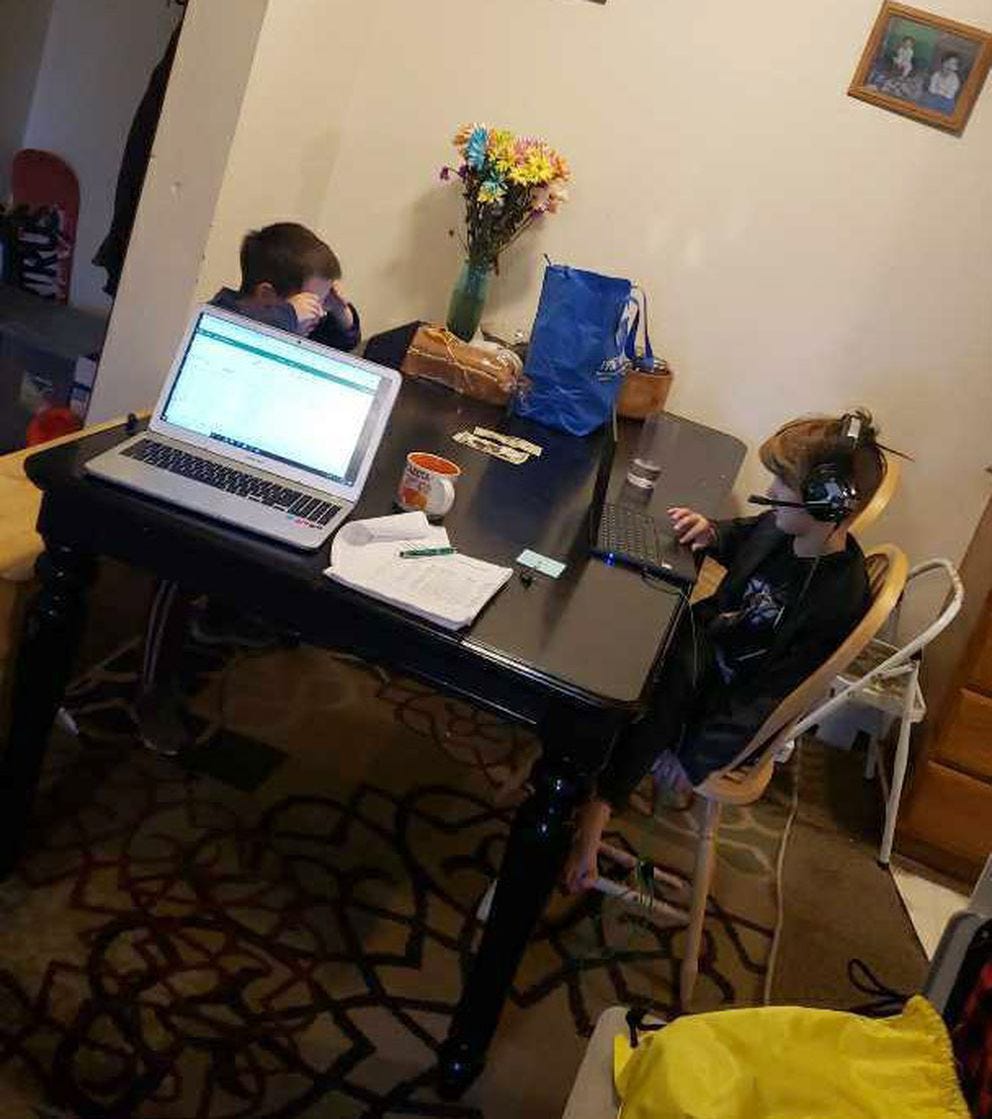
Image: Emily Goodykoontz’s workspace
For most of us that means building or reinforcing existing habits around planning, organising and doing our work. The good news; even if we are not inclined to be particularly ‘consci’, we can do this. Roy Baumeister, author of Willpower, suggests simple steps to practice to build up the practice of ‘conscientiousness’ Check him out here
The positive spin on cracking on with this – people who score higher on the conscientious dimension get a lot of general benefits. By getting in the habit of setting goals, writing time-lines and To Do lists (and crossing items off), and the rest, you are strengthening a conscientious ‘muscle’, which can be applied across other life zones.
How conscientious are you? Joshua Jackson has compiled and validated a behaviour checklist. Some examples of ‘on’ and ‘off’ conscientious (I have a longer check-list if you want – stewart@fxc.co.nz – ‘Conscientious behaviours’):
‘On’ conscientious
Set a timeline for getting a project done
Persist at a task after setbacks or failures
Double-check my work
‘Off’ conscientious
Put off work till the last minute
Waffle when asked to commit to group projects
How conscientious can you get? Is there a risk of beoming a workaholic or a perfectionist? Often these aspects of over-the-top conscientiousness are driven by ‘nervousness’. If you are inclined to worry generally you might want to include some relaxing approaches in your routines.
Proceeding on the assumption that there could be some habits you would like to strengthen, here are four suggestions:
If – then – Starting anything of the bat is a big ask. If – then – is a nifty way to hook new appraoches into your existing lifestyle. Examples:
If – I’m sitting in my work area, then – I’ll check my To Do list (which is where? Pinned to the wall? Excellent!)
If – it’s half an hour before bed-time, then – I’ll start my wind-down routine (screens off, lights dimmed, making the list of things I need out of my head, but still available to check tomorrow
Start on a slope Get work set up, on the desk or the computer so it’s good to go, before you take a break or finish for the day. Example:
I’ll update the To Do list, including ticking those completed, and highlight what comes next, then find the phone number of the person i’m going to call when I get back from my lunch break.
Sprints, not marathons Set up your work materials, then set a timer for 30, 45, 60 minutes – and go for it. If there are distractions – make a note (if you texted a caller you will get back, note that commitment on the To Do list, if you told a child you’d look at their work in 8 minutes – write yourself a reminder that this is a commitment. Otherwise – keep On Task.
Here is a 1 minute video about the Pomodoro approach -
Take a break Breaks don’t need to be caffeinated or empty calories, some examples:
Look, listen, feel, smell, taste Sand or sit quietly, feel your feet on the floor or bottom on the seat, notice an in- and and out-breath. Look at 5 different things – in each case checking out the detail of what you are looking at. Listen to 4 differnt things, noticing what makes them special. Feel 3 things – it might be your feet, your stomach as you breathe, your tongue on the roof of your mouth. Smell 2 things. Taste one thing.
Seven-Eleven breathing Again - stand or sit quietly, feel your feet on the floor or bottom on the seat, notice an in- and and out-breath. Breath in gently, counting to seven. Pause. Breath out – counting to 11. Pause and repeat.
Stewart Forsyth is an organisational psychologist and executive coach and also the author of 21 Remarkable People – available from Amazon or Apple or other eBook sources.