
Image: harpercollins.co.nz
Nigel Latta died from stomach cancer in September 2025.
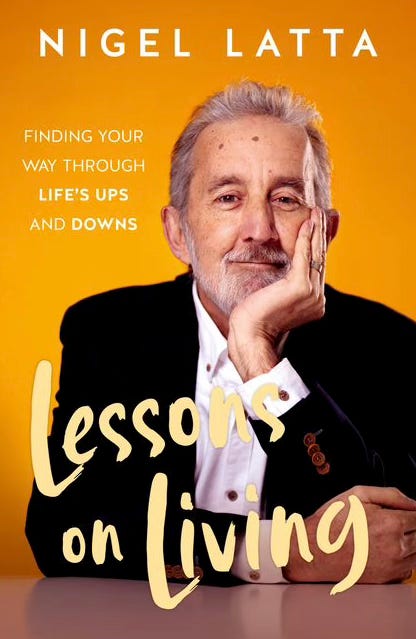
He wrote Lessons on Living: Finding Your Way Through Life’s Ups and Downs in the months between diagnosis and death.
The book features Latta’s diagnosis and treatment, and the Ups and many Downs of that experience. But despite that grim through-line, his book is funny. Latta uses the inevitability of mortality to create his meaning of this experience, and in a blend of poignant and entertaining, shares how we can make sense of life and death.
Latta knocks big issues into shapes that make them useable. He applies this in a straightforward guide so you too can Find Your Way. He shares relatable personal stories, illustrations from the wisdom of philosophers and researchers, and zany stories (men being trampled to death by their pet bison as an illustration of the value of planning ahead – is it sensible to have a bison in your living room?)
Latta is well known for communicating the importance of psychology and science through television. His book, valuable in its own right, is a final flourish from a superb communicator.
His book is more that the Lessons. It is in the way he communicates them. He has three principles for living your life (my summary: 1. Get going, 2. Focus on your thoughts and actions, the things you can control, 3. Work with your team). Many more of his checklists are 3 steps (for example, teams rely on safety, vulnerability and purpose), and “the three duck problem” (1. Are my thoughts accurate? 2. Is my thinking about this actually helping me? 3. Is there a way to solve this?).
He makes and reiterates key points with snappy sentences (“fall over, get up.”)
He illustrates the legacy of evolution in our present lives (“stone age brains in smart phone times”) through slapstick conversations where characters with a 21st century vocabulary and knowledge of corporate culture talk through stone-age dramas (“Nate got Ate” illustrates the importance of not being a dick like Nate).
He has powerful metaphors (“fear pushing against the insides of me like slick leathery fingers” or the “sooty old rooster” of death).
All of this means that his book is readable as well as stuffed full of practical approaches to living well and getting the most out of your life.
In his moving and wonderfully researched article on end-of-life coaching Iain McCormick describes working with people knowingly approaching their death.
He describes the value of a narrative approach to coaching with these people. Retelling a story of being powerless to the force of cancer to a story of leaving a lasting legacy. Latta achieves this as he asks and answers the question of whether living an intentional life is more successful than drifting along. As he says, “you want to arrive where you always wanted to be.” And, for him that was the realisation that “… there is only love”.
In New Zealand we have articulate and pragmatic champions of different important aspects of our lives. In economics we have Shamubeel Eaqub. For the dynamics of demographics, Paul Spoonley. Jarrod Haar makes organisational psychology accessible. All are superb communicators, as well as relying on the evidence rather than conventional wisdom.
People like them and Nigel Latta make New Zealand more meaningful and more liveable, helping to uncomplicate our world.