Evidence-based coaching
The latest developments

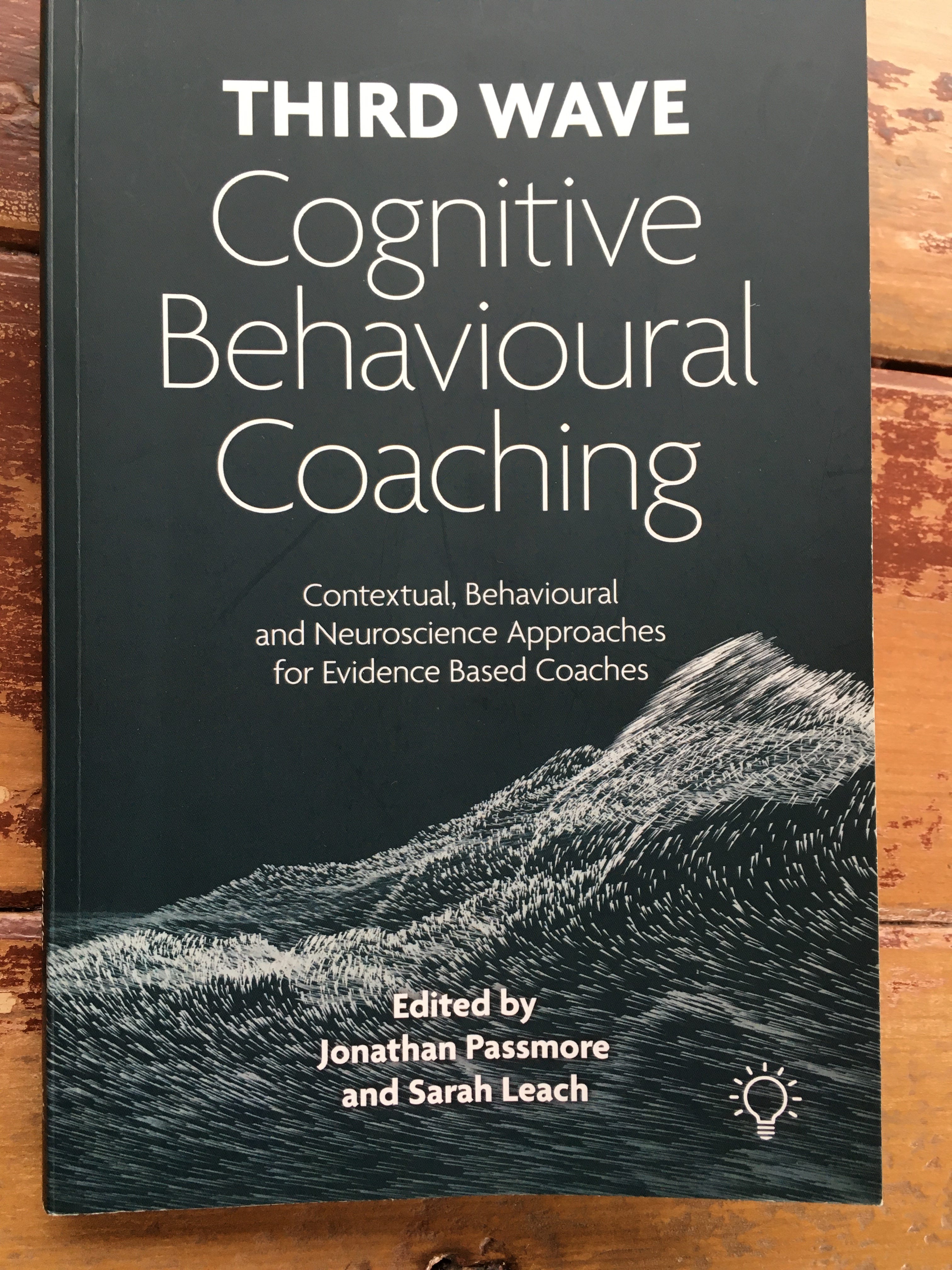
A review of Jonathan Passmore and Sarah Leach (2022). Third Wave Cognitive Behavioural Coaching: Contextual, Behavioural and Neuroscience Approaches for Evidence-Based Coaches. Pavilion Publishing and Media, West Sussex
When you pick up a 302-page 12-chapter book on coaching you don’t anticipate that every chapter will add value to your coaching practice. More like a conference or music festival, you look forward to a few phenomenal sessions that will inspire you to change up what you do (or who you listen to). Third Wave beats those expectations.
Third Wave covers progress with third-wave coaching initiatives, but wait, there’s more. Passmore and Leach also provide excellent coverage of the first (behavioural) and second (cognitive-behavioural) coaching waves – this background also provides a launching pad – a quality of third-wave coaching is the readiness to borrow, especially from the validated approaches that have come before.
But wait again – the book includes ‘beyond third wave’ coaching approaches – this includes motivational interviewing and a delightful chapter on the neuroscience of coaching – including clear suggestions from the complex literature for helping executives with decision-making and goal-setting.
The editors have included mindfulness, ACC (acceptance and commitment coaching), also compassion-based coaching, even (although tentatively in terms of the evidence of coaching effectiveness) schema therapy, metacognitive coaching and DBC (dialectical behaviour coaching).
A theme of third-wave coaching is a wider and more inclusive view of the client – not just helping the client improve their effectiveness at work, but helping them improve their lives overall. That means their behaviour, thoughts, and emotions and expanding out to values and identity.
Perhaps reflecting the influence of traditions outside those guiding preceding waves, the third wave is also notable for a greater focus on acceptance, non-judgement and compassion.
In an excellent book, some standout chapters for me were Compassion Mind Coaching (CMC), Mindfulness and Coaching and Schema Coaching.
Compassion Mind Coaching (Tim Anstiss). It is reassuring that each chapter follows a framework of Theory/Research/Practice / with a wrap of engaging and challenging questions for the reader to reflect on. So that when you get to a phrase like “[compassion] enables you to tap into and cultivate innate compassion pathways within the human mind” (P 113), you have the evidence right there. For example Kirby’s 2016 review of 8 compassion-based interventions, with 6 having been evaluated in RCTs. Kirby reports moderate effect sizes for CMC on reducing suffering and improving life satisfaction.
Anstiss illustrates a wide range of compassion-building practices. One example is chairwork. This is also an example of the cross-over between chapters – there is a great chapter by Matthew Pugh on Cognitive Behavioural Chairwork with a dazzling array of different chairwork methods.
In Anstiss’s example, the client begins in chair 1 as the ‘usual self’ describing issues, then moves to chair 2 and assumes the role of ‘critical self’ and talks to chair 1 (the usual self). The client returns to chair 1 and replies as the usual self, then moves to chair 3 and as the (previously practised) ‘compassionate self’ talks with the critical self.
Mindfulness and Coaching (Jonathan Passmore, Katherine Finlay and Simon Barnes). This rich chapter addresses how mindfulness builds the effectiveness of the coach as well as introducing practices that can contribute to the development of the client.
There are examples of innovative mindfulness of the breath and loving-kindness meditations (including links to online versions of these), and links to resources from the Search Inside Yourself Leadership Institute (a Google initiative).
The authors make the point that coaches should not represent themselves as meditation trainers until they have completed accredited training and have an appropriate supervisor. They counsel that the coach with an established meditation practice, but who has not completed training should offer to ‘share’ their experiences of meditation when introducing them to the client.
This is useful advice for those considering applying the other coaching tools described in the book.
Schema Coaching (Iain McCormick). Along with other third-wave coaching modalities, Schema Coaching has a therapeutic backstory, with good evidence of effectiveness in the treatment of BPD (borderline personality disorder), depression, and more recently relationship and other difficulties. McCormick cautions that there is not yet good quality research indicating the effectiveness of Schema Coaching but holds out its potential for high-performing yet troubled executives.
McCormick emphasizes the experiential nature of schema-based approaches, including visualisation and chairwork. These techniques are typically used to help the client re-live and re-integrate difficult early experiences, with the coach involved in supporting the ‘reparenting’ of the client as a child. The coach supports the client to develop their ‘healthy adult’ by providing both emotional support and a behavioural model of ongoing effectiveness.
A useful aspect of McCormick’s chapter is the detail he provides on the steps of the practice, the options available, and even a plan for an all-day session.
Third Wave provides a comprehensive guide to powerful tools and evidence of the effectiveness of third and earlier waves of coaching. The contributors are also clear about where we need to go in terms of future research and innovation.
A few limitations of Third Wave – its strong western orientation and the lack of alternatives to one-on-one or small-group coaching.
There is some acknowledgement of the mono-cultural nature of the approaches described, but no examples of the application of coaching approaches in non-Western cultures. A case study in Dr Hamali McInnes’s book The Unexpected Patient covers the treatment of a traumatized Māori woman through a blend of psychiatry and traditional cultural practices. The integrative emphasis of third-wave approaches could lend themselves to including such worldviews in coaching practice.
A challenge in an era of higher rates of poor adjustment and disturbing emotions is how to scale up effective approaches. How do we help the massive numbers of people who deal with frequently disabling emotions to manage their work and life and to build on their strengths to enable a rich and full life? ‘How to’ articles and books together with apps, podcasts and videos, can offer access to more. This in turn will require greater efforts at developing and validating approaches.
Stewart Forsyth is an organisational psychologist and executive coach and also the author of 21 Remarkable People – available from Amazon or Apple or other eBook sources.
References
James N. Kirby (2016). Compassion interventions: The programmes, the evidence, and implications for research and practice. Psychological Psychotherapy, 90 (3) 432-455.
Hamali McInnes (2021). The Unexpected Patient: True Kiwi stories of life, death and unforgettable clinical cases. Harper Collins, New Zealand.