Femicide
Men’s murder of women has evolutionary roots and contemporary encouragement

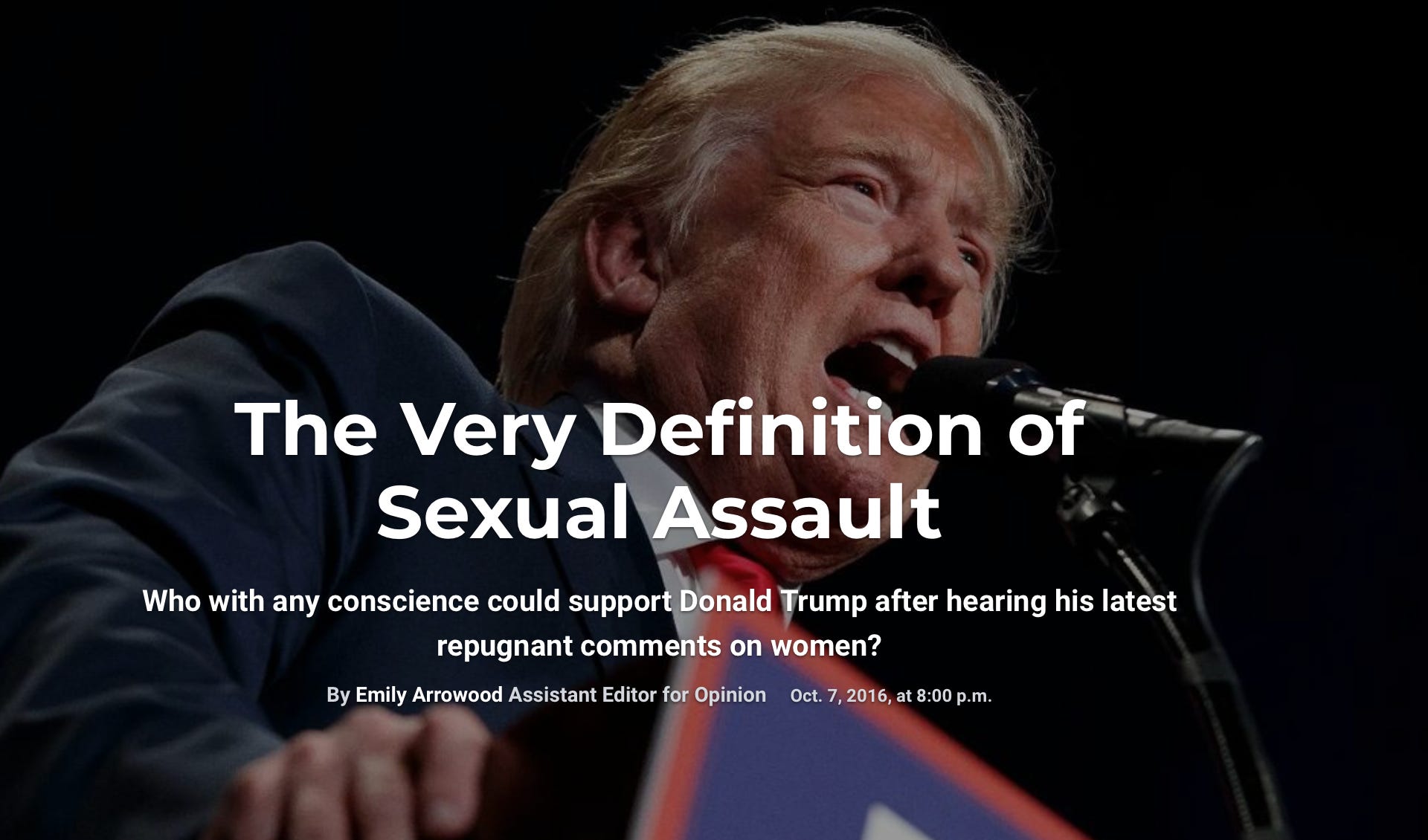
Image: usnews.com (2016)
Greg Meads shot his wife Helen Meads at their Matamata home in September 2009. Meads claimed that he did not intend to murder her, that he took the loaded gun to confront her after she announced she was leaving him, and that her death was an accident.
During the court case, there was evidence of previous domestic violence. Meads was found guilty of murder and ordered to serve 11 years without parole. As of 2023, he has been refused parole because he is judged to have made limited progress – he was told to work with a psychologist on his narrative of the shooting of his wife.,
Violence is a part of the life of too many NZ women. That is demonstrated by our high rate of femicide. While male-on-female violence has an evolutionary history, there is also the local history – especially the not-uncommon belief that it is OK to control women and their sexuality.
A study comparing levels of female homicide across countries, based on 1998 data, found that at a murder rate of 1.3 per 100,000 women New Zealand was the fifth highest of 25 comparably wealthy countries. Not that any level of femicide is acceptable, but New Zealand’s rate of murders of women was, at the end of the 1990s, more than three times that of England and Wales.
Research by Anna Leask, covering the decade 2011 to 2021, indicated 136 New Zealand women died as a result of ‘violent or abusive events’ over this time. That converts to a rate, for women over 18, of .72 homicides per 100,000. Lower than the 1998 rate, but still higher than many rich countries.
Community context defines such violence as okay or not okay (see the graphic American example below). Building awareness of the unacceptability of such controlling behaviour, combined with firm policing and therapeutic support for offenders improves lives and saves lives.
Evolved psychological systems
“A murdered woman is as likely as not to have been slain by her spouse” is a key insight of leading researcher Margo Wilson. The UNODC (United Nations Office for Drugs and Crime) review agrees: “A total of 87,000 women were intentionally killed in 2017. More than half of them (58 per cent) ̶ 50,000 ̶ were killed by intimate partners or other family members.”
Males inherit an inclination to coerce sexual partners or potential partners. Men are likely to enact this evolved system when the spark of their perception that their partner might leave them ignites the accelerant of beliefs that violent solutions are okay for dealing with such threats. Margo Wilson describes this as a male's ‘proprietary’ system.
We have an inbuilt system that encourages us to eat energy-dense foods when they are available. Think fried chicken and chips. There are 25.9 billion chickens in the world – an illustration of the attraction of this tasty food source. But dear reader – you don’t eat fried chicken all that often. Or other foods that brilliant marketers have packaged to appeal to the system that encourages ‘eat fatty, salty food when you can’. You have developed alternative behaviours. Not least steering away from the fast food joint when you’re hungry. The psychological systems we inherit are not our inevitable fate. But, and it’s a big but, people vary in their inclination to follow through the nudges provided by particular systems.
Which men are most vulnerable to this proprietary behaviour? The World Health Organization (WHO) indicates that women are more at risk from men who have a limited education, a history of abuse during childhood, exposure to domestic violence against their mothers, and who use alcohol harmfully. Dangerous attitudes that rationalise violence include belief in the value of unequal gender norms, believing that violence is appropriate, and a sense of entitlement over women.
An age difference is another risk factor. Especially, according to one review, when the male partner was around 15 years older than the female partner.
Proprietary males and misogynistic politicians
Males who murder their partners have a history of previous violence against these women. There is a simple, deadly, escalation of violence – from slaps, and beatings, to the use of a weapon, to lethal violence. As the UNODC survey puts it, murder results from the “culmination of prior gender-related violence.”
Greg Meads claimed that his wife’s death was “an accident”. This is a common belief in such femicidal men as is the common lack of remorse. These men’s beliefs about the righteousness of controlling women may be reinforced in their community. When the violence tips over to injury or death, it’s a simple process to rationalise that as an accident.
Some communities are more likely to encourage rationalising beliefs about the right to use violence to control women. Across the United States rates of femicide vary hugely. FBI summaries for 2021 indicate that in the lowest 20% of US states, 0.6 in 100,000 women are murdered. In the highest 20% of states, the risk of murder for women is over 7 times higher – at 4.5 per 100,000.
At any time, in any of these states, some men are going to believe, rightly or wrongly, that ‘their’ partner is checking out alternative partners. It is the differences in how communities in different states do or don’t discourage violence against women that contributes to this massive difference in killing.
People who vote for a misogynist are presumably more likely to believe that men have the right to control women with violence. There is a small correlation between the state-level vote for Trump rather than Biden in 2020 and that state’s level of femicide in 2021. This correlation only explains 10% of what is going on in rates of femicide. That leaves 90% of rates of femicide looking for an explanation, but it indicates that voting for a candidate with a record of bragging about physical attacks on women could fit comfortably with the belief in the community that in some situations men are entitled to use violence to control women.
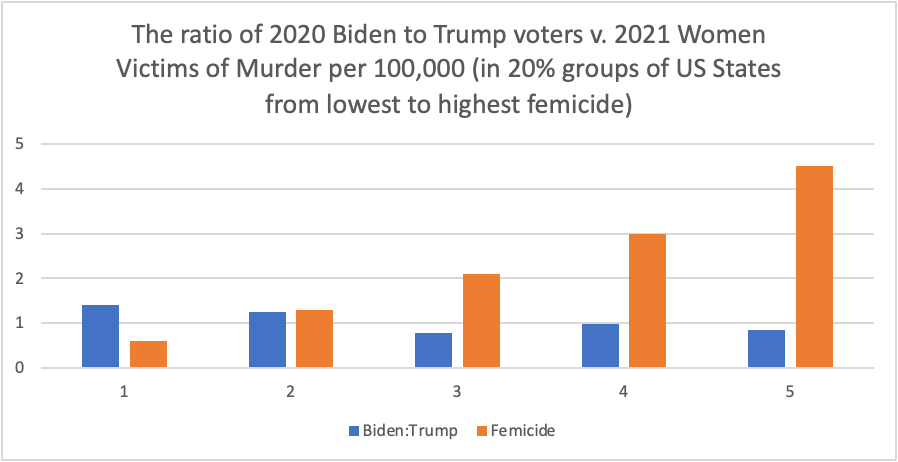
The blue bars show support for Biden relative to Trump. Overall the ratio of votes for Biden to those for Trump was 1.10 – for every 100 Trump votes there were 110 for Biden. In the two ‘quintiles’ of the states' lowest for femicide (the lowest 40% of states for the rate of women being murdered) the Biden:Trump ratio is above 1.0. Then this voting ratio goes below 1.0 in the three higher-femicide quintiles of states (though only just in the fourth quintile). Voters are more inclined to vote for Trump in states where rates of femicide leap up beyond 4 per 100,000 for the fifth quintile, the 20 states with the highest rates of female murder victims.
Other threats to women and girls
Violence by intimate partners is not the only threat women and girls are vulnerable to. Women and girls are more at risk during state and group conflict. Serial killers target women. These risks are lower in New Zealand and are not driving our high rates of violence against women.
Treating male offenders and risk reduction for women and girls
Treatment that targets offender’s patterns of violence, and their beliefs about ‘proprietorship’ and also therapy directed at behaviours such as substance abuse that increase the risk of violence against women do have long-term effects. A 2012 review and meta-analysis of treatment for intimate partner offenders led by Aine Travers provides some hope. Treatment had a real long-term impact when matched to the level of men’s risk of reoffending.
At the personal level:
· Look out for any history of violence towards women or girls or behaviour that could lead to violence. Has this individual exploited intoxicated females? Are there examples of unwelcome touching?
· If you or someone you know is in a relationship where you have concerns about violence, you can check this person’s record of violent offending by phoning the police or making a request in person to an officer at a police station
· Listen for attitudes supporting coercing and controlling women. “Women will let you do it” (Donald Trump); “Women belong in the home, can’t drive and are men’s property” (TikTok misogynist Andrew Tate).
Thanks Stewart. Another thoughtful summary.
All the best, Cheryl