Night Work
Chronotype and personality

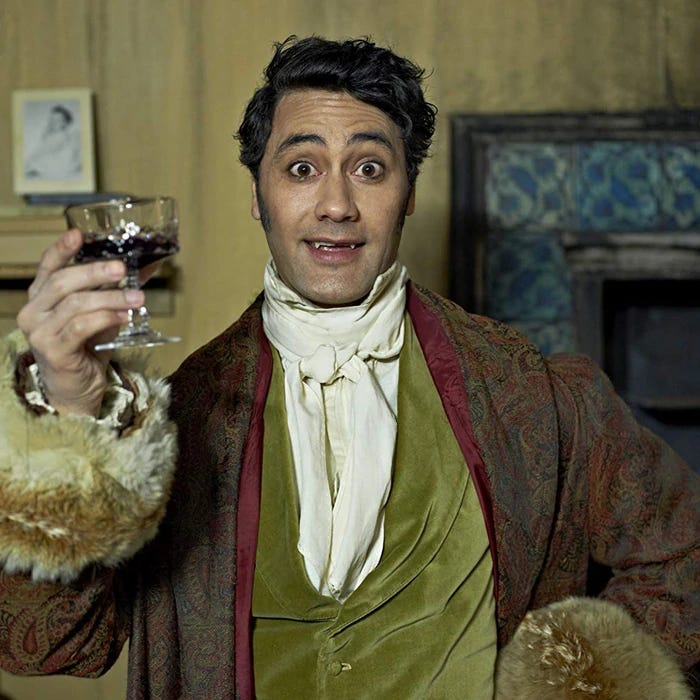
Image of Viago von Dorna - villains.fandom.com
In the movie What We Do In The Shadows, vampires Viago, Deacon and Vladislav catch the night bus into town from their Te Aro flat to go find people to kill.
For many cultures, the creatures of the night are both marvellous and dangerous. Is this because the humans that hang out in the shadows are more anti-social? A recent paper by Anita Lenneis and colleagues looked at the personality of those who sleep (and wake) later.
They used self- and informant-reports of personality – so getting a good fix on the nature of their 2,515 Estonian humans. They relied on these people’s self-report of their sleep patterns. And, interestingly, they also had access to their genomes – enabling the cross-reference of genes with both ‘chronotype’ (sleep-timing) and personality (using the Big Five model).
Lenneis and her colleagues built a summary model of relevant genes – assuming that the genes that influence chronotype could also influence personality. They found a trace of an effect of genes on personality – but at 0.7% that indicates an interesting result rather than one with any great meaning.
They found moderate links between personality and chronotype. The headline result is that Conscientiousness is related to morningness and Openness related to eveningness. That leaves those of us high on both at risk of sleep deprivation – inclined to be late to bed and then up early.
A strength of this study is its coverage of facets of personality – the more specific aspects of how we behave that build up to the Big Five. They also controlled for demographics. Young people were more inclined to eveningness, as were those with higher education. Gender had no effect.
Of course, these ‘background factors’ are not independent of personality – Conscientiousness develops over a lifetime (or a career) and there is a relationship between Openness and education.
But if we take these and other background aspects out of the analysis we get eveningness related to E5: Excitement-seeking and A2: Straightforwardness, and morningness related to C5: Self-discipline.
There is evidence that those high on E5: Excitement-seeking are attracted to alcohol, bright colours and noisy environments – which could lead to partying behaviour contributing to eveningness. The frank, sincere and ingenuous style of the A2: Straightforward could result in them spending the late hours in free-wheeling discussion. The C5: Self-disciplined may avoid such distractions, and even have a regime of health-promoting activities, including rising early after 7-8 hours sleep.
For me, the surprise was what did not relate to chronotype. Perhaps it is not surprising that the aspects of emotional stability did not feature. This is not a study of sleep duration, but of when people do sleep. More emotional people may get less sleep, but still get it in the usual time slot.
I did think we might see some link between ‘low agreeableness’ (such as shown by vampires) and eveningness. A5: Modesty was related to eveningness – but this is more likely to mean you’re going to be bored by some big-noter you meet in the late hours than at risk of being taken out.
Stewart Forsyth is an organisational psychologist and executive coach and also the author of 21 Remarkable People – available from Amazon or Apple or other eBook sources.