Paul Callaghan
Connector

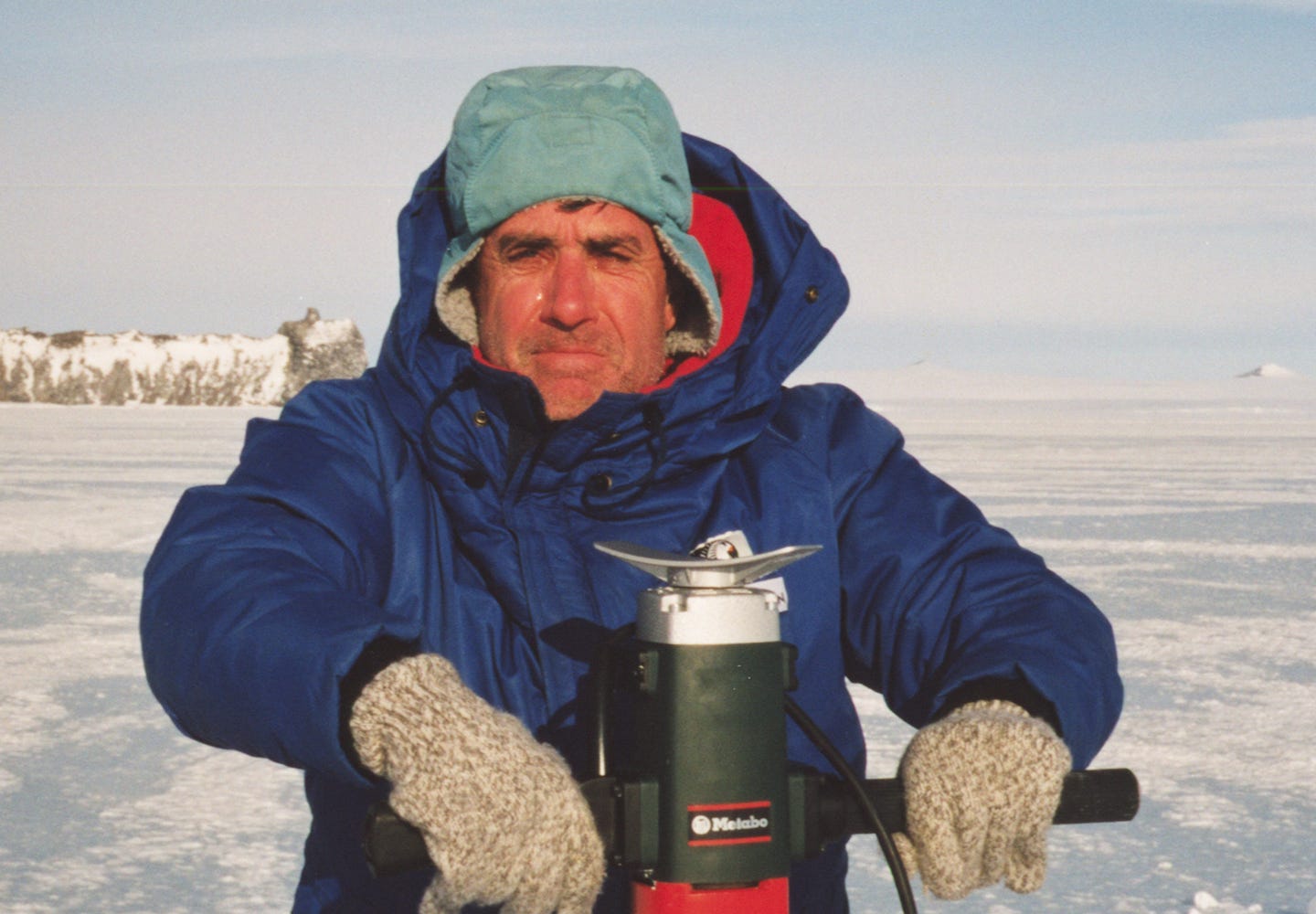
Image: 21 Remarkable People
Eager to explore across what others might see as boundaries, Paul Callaghan left a legacy as a researcher, technology businessperson and explorer of possibilities.
‘Beyond the Farm and the Theme Park’ was the first chapter in Paul Callaghan’s book (Wool to Weta, 2009) sketching out his vision of a high-tech, high-innovation, high productivity New Zealand. He gave the example of high-value exporters such as Fisher and Paykel Healthcare, whose clever design had enabled them to dominate the tiny niche of medical humidifiers.
His point was that New Zealand needed to create an ecosystem to sustain other idiosyncratic niche players. By his estimation – at least 100 more than the 10 players he identified. One of the conditions for creating such an ecosystem was to make New Zealand “a country where talent wants to live.”
Last year NZ had 23,000 tech companies, employing 112,000 – so on average, they are small, about 5 people per company. But the top 200 tech companies earned $12.7 b globally last year, around 8% of our GDP while employing 5% of our workforce.
Technology is shaping up as a transformative driver to our economy and society. One of the qualities we can see in Callaghan’s personality illustrates how that transformation can be achieved.
Callaghan put his diverse interests and contributions in a nice frame: “I’m kind of a contrarian individual in some ways, I’m a mixture of tendencies pulling in different directions and that’s a paradox I live with all the time, the only way I can satisfy that is being broader than just one aspect of my profession.”[1]
In the time following his cancer diagnosis Callaghan continued a wide range of activities – writing a textbook, co-writing a book on New Zealand’s economic potential, inspiring a public event at Tologa Bay to celebrate the transit of Venus and to encourage discussion on New Zealand’s future, promoting the vision of a predator-free country, and also researching his cancer, and possible medical treatments. He recorded these events in a blog – providing all with the opportunity to follow what he learned about his disease, and the results of treatments.
Poet Bill Manhire was involved with Callaghan in a collaboration between physicists and writers. He movingly describes how Callaghan created a performance of the end of his life: ‘a generous death,’ comprising the sharing of his life with family and New Zealanders.[2]
Callaghan demonstrated the value of being connected across diverse networks as well as collaboration with these varied players. Connectivity across boundaries, and in turn collaboration provides innovation potential.
Research in Antarctica, socialising (with celebrities, politicians, scientists, research colleagues), bush-walking, trout fishing, travelling, building things (including a variety of sophisticated technical devices), blowing things up (in his youth) – this range of activities indicates someone who enjoyed the stimulation and variety that life provided. A practical example: ‘He established a multidisciplinary approach to research long before such ideas became popular.’[3]
We know that Callaghan could be demanding. We might surmise that he was across many projects and initiatives, relying on other people to keep things keeping on, with the potential that the outcomes were not always what he expected.
Other connectors, perhaps lacking Callaghan’s incredible range of talent might consider how they can be effective leaders while riffing with a range of relationships and responsibilities.
When asked what one word would best describe his contribution Callaghan offered up “resonance.”[4] This reflects his science – exploring magnetic resonance, and also his technical and business work – developing technologies applying magnetic resonance approaches to identifying what was going on in a range of materials (ice in Antarctica for example). The word also provides a wonderful metaphor for his ability to work with people, in teams and across networks and to connect with wide communities of people. His legacy continues to resonate.
Stewart Forsyth is an organisational psychologist and executive coach and also the author of 21 Remarkable People – available from Amazon or Apple or other eBook sources.
[1] Featured in the documentary Dancing With Atoms (2018), directed by Shirley Horrocks (trailer -
[2] In Dancing With Atoms[3] Michael J. Kelly (2017). Obituary. Sir Paul Terence Callaghan FRS PCNZM. https://royalsocietypublishing.org/doi/10.1098/rsbm.2017.0006[4] Bill Manhire in Dancing with Atoms