Retirement, not
The pushes and pulls that influence retirement decisions

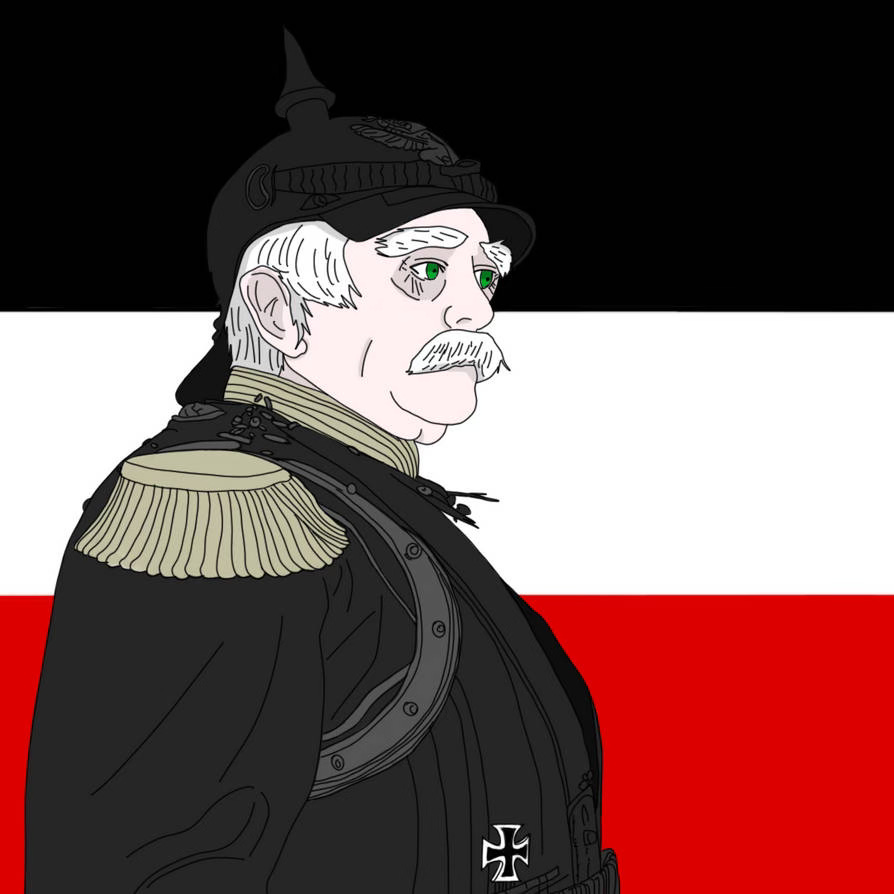
Otto von Bismarck, the tricolour flag represents the North German Confederation. It reflects the unification of German states under Prussian leadership. Image: Yoka Caesar, deviant art.com
Modern retirement was invented in 1889 by a 74-year-old German Chancellor named Otto von Bismarck, who set the eligibility age for a government pension at 70 in a country where the average male life expectancy at birth was around 40. These days we have higher life expectancy (in New Zealand 80 and 83 for men and women respectively), and a problematic expectancy of continued superannuation from age 65.
With around 20 years of life expectancy remaining at age 65 (at this age you have longer life expectancy, having successfully navigated the hazards of early life), many are looking at 20 years of retirement with limited enthusiasm.
And many, according to a 2025 study by the IMF, have the capability to keep working.
Taking advantage of a natural experiment, when a university scrapped mandatory retirement, Lorraine Dorfman interviewed those working on, and then 10 years later, caught up with them again. What was the attraction of work? They enjoyed it, their work gave them a sense of purpose.
What helps people keep on working past retirement age? The research indicates both individual and organisational factors.
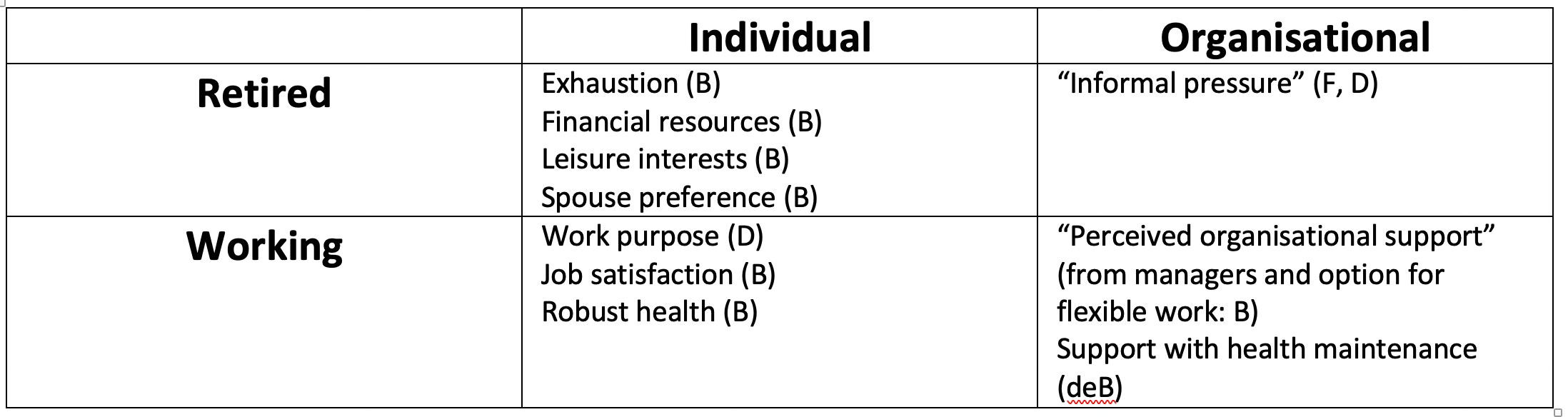
The factors labelled “B” (for Terry Beehr) come from a 2000 study of 197 American government employees coming up to retirement age (and their spouses). Beehr saw a range of factors pushing individuals toward retirement – burnout and exhaustion, having adequate finances to sustain retirement, and alternative leisure activities, along with a tug from spouses. Factors working the other way – pulling workers to keep working, were in some ways the opposite – job satisfaction (beyond the satisfaction offered by leisure activities?) and robust health.
The Dorfman study (“D” in the table) emphasised the purpose of work for professors keeping on. A sense of purpose can be understood as an example of “eudaimonic happiness” – providing meaning and enhancing longevity.
A comprehensive master’s thesis by Nina Field (“F”) found that intention to retire in New Zealand workers was strongly influenced by “informal pressure”. The same result emerged from Dorfman’s longitudinal research.
If workers see that their employer supports their continued working, they are more likely to keep going. A practical example is provided by Angela de Boer and colleagues (“deB”). They ran a randomised controlled trial with workers whose health issues meant they needed to take early retirement. After two years those receiving occupational health support were more likely to still be in work.
As noted above, in some organisations people who could keep contributing are nudged out. Agism is a real thing. But, AI-induced job Armageddon notwithstanding, it is probable that some older people will be in the future workforce mix. Anti-silver attitudes may evolve. This is demonstrated in a remarkable study following up attitudes towards older workers over 210 years.
Reuben Ng and Nicole Indran pulled examples of American text (a total of 600 million words) from the period 1810 to 2019, and they rated the evaluative tone of this text in terms of workers’ ages and professions. Older doctors, soldiers and lawyers who remained in work were seen more positively than other older people. Lawyers who continued their practice did well – positive evaluations were up 23% over the 210 years.
If your organisation wants to retain the skills and commitment of older workers, show them support. Meet their needs for flexibility and help them to maintain their health. If your work is meaningful, keeping going will maintain that source of fulfilment, and, the research indicates, will keep you alive for longer.