Ukraine:
Where now for the antagonists?

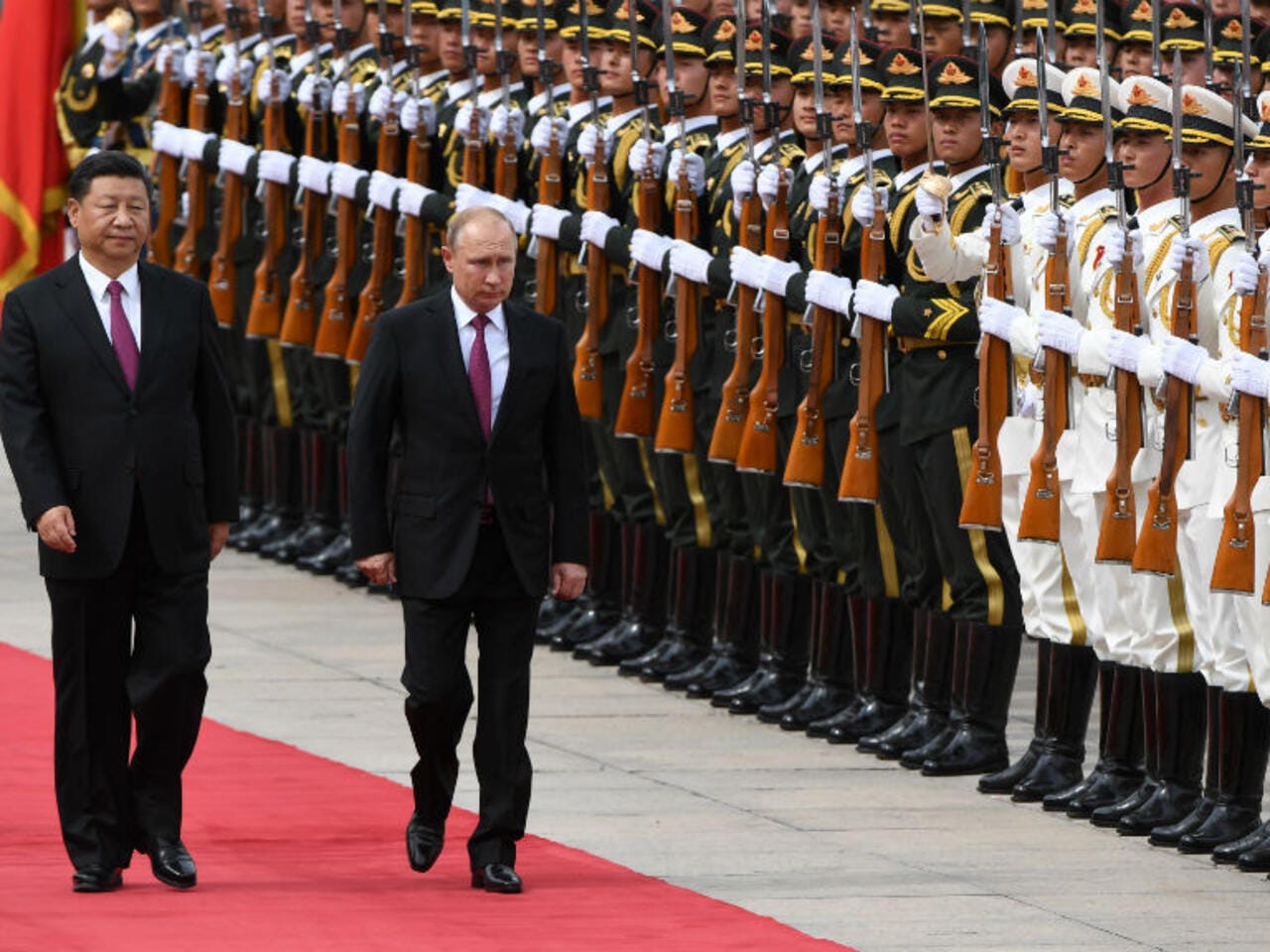
Image: france24.com
Vladimir Putin has reacted to the advances of Ukraine’s forces. Like a gambler throwing good money after bad, he has raised the stakes by calling for the mobilisation of reservists. The fighting looks set to grind on. But what will he do if there are further defeats?
Putin is, according to Professor Sergey Radchenk, Professor at the John Hopkins School of Advanced International Studies, “in the middle of a war he is losing”. This is a concern since many think that Putin could take a loss badly.
How about Volodymyr Zelenskyy? How will he handle the challenge of victory or at least a negotiated settlement with significant Russian concessions? He has the advantage of a varied career, and as an actor, many changes of role. He will move from war leader to statesman. And begin appealing for economic support rather than munitions.
There is a third player who has done his best to stay out of the frame. Xi Jinping has shown some encouragement to Putin. He has bought oil with Russian rubles, but has not supplied military material. Meanwhile, he has been watching and learning. Putin spoke of “questions and concerns” after meeting Xi at Samarkand, Uzbekistan. Xi wants to ensure that his plan for annexing Taiwan is informed by the lessons of Putin’s invasion.
Putin and Xi get along. They have a shared agenda. Both want to knock America from its dominant position and establish a ‘multi-polar’ world. There is more going on between them than geopolitics. Both are autocrats who believe in their country’s great destiny. They have taken care to choreograph events to help the other. Xi visited Sochi for the opening of the 2014 Winter Olympics, after which Putin annexed Crimea.
Putin returned the favour – visiting Beijing in 2021 for the opening of the summer Olympics, and delaying his invasion of Ukraine until the games were wrapped.
Another worrying similarity is the way they deal with dissent (or as they portray it, disloyalty). In 2015 Swedish national Gui Minhai was kidnapped from his Thai holiday home and removed to China. He is one of five who published satirical books about the mainland Chinese elite. All disappeared to China. Putin prefers more dramatic moves – such as the Salisbury poisonings (of Sergei and Yulia Skripal) and the poisoning of opposition leader Alexei Navalny.
There are some differences. Putin uses the legitimacy of the Russian Orthodox Church to fuel his message of being on a divine mission to extend Russia’s borders. His recent name-checking of Peter the Great as a role model indicates that Ukraine is just one of many territories to incorporate into a greater Russia.
Xi articulates a similar mission of reclaiming the glory of the empire (stolen by the West) – maybe not a divine mission, but still promoted with religious fervour.
Putin presides over a corrupt kleptocracy – scoring a ranking of 136 (of 180 countries) on Transparency International’s 2021 rankings of countries from clean to corrupt (cleanest are Denmark, Finland and New Zealand; the most corrupt at 180 is South Sudan). Xi made the rooting out of corrupt officials a big part of his first years as President. China ranks cleaner than Russia at 66, but it is notable that in his fight against corruption Xi has removed competitors and established an anti-corruption agency which ranks higher than the Supreme Court – giving him power above the law.
Both leaders subscribe to traditional, conservative values. For Putin that is the anti-gay, rigid gender-roles views of the Russian Orthodox Church. Xi also promotes initiatives against ‘sissy men’, and has a PhD in political orthodoxy (‘law and ideology’).
Xi combines a fixed mindset (demonstrated in China’s perseverance with using lockdowns to control Covid) with a getting things done style. Former US Treasury Secretary Henry Paulson describes him as “the kind of guy who knows how to get things over the finish line”.
Putin stands out for his narcissism, the need to be admired for being at the top, with no feeling for those below him. In personality terms, this reflects the assertive aspect of extroversion with an antagonistic ‘disagreeable’ core. The clues are his media profile (including topless horse-riding). Also his grandiose aspirations for a new Russian empire, and the brutality he cultivated in the mean streets of post-war Leningrad. According to biographer Masha Gessen, one childhood friend recalls that if anyone dared to insult Putin, he “would immediately jump on the guy, scratch him, bite him, rip his hair out by the clump—do anything at all never to allow anyone to humiliate him in any way.”
A 2021 meta-analysis combining 437 studies including 123,043 people indicates that narcissism is not a harmless inclination. Narcissists are more likely to be aggressive and violent. The result holds for men and women, people from individualistic or collectivist societies, and for all ages from young through old. It is a small total effect, but still real. The risk of violence increases under ‘provocation’. Of course for the narcissist – provocation is when they don’t get their way.
This raises the stakes when Russia experiences further defeat in Ukraine.
There is concern about Putin’s threat to use tactical nuclear weapons. Chemical or biological weapons might be a bigger risk. These are more deniable, and that provides more copy for the misinformation efforts of Russia and its proxies. That builds confusion and potentially limits the response of Ukraine’s allies.
What will Xi do as things get worse in Ukraine? Confusion could give him cover for his assault on Taiwan. Or he might go for a longer game. Even helping achieve a negotiated settlement.
But keep a wary eye on what comes after the 2023 Asian Games (ending 8th October) – to be hosted by Hangzhou, China.
Stewart Forsyth is an organisational psychologist and executive coach and also the author of 21 Remarkable People – available from Amazon or Apple or other eBook sources.